How to read a Swiss corporate network
What a network view of the Swiss commercial register shows — shared officers, addresses and publication history — and how to read one without over-reading it.
By Swiss Graph Research9 min read
Topics
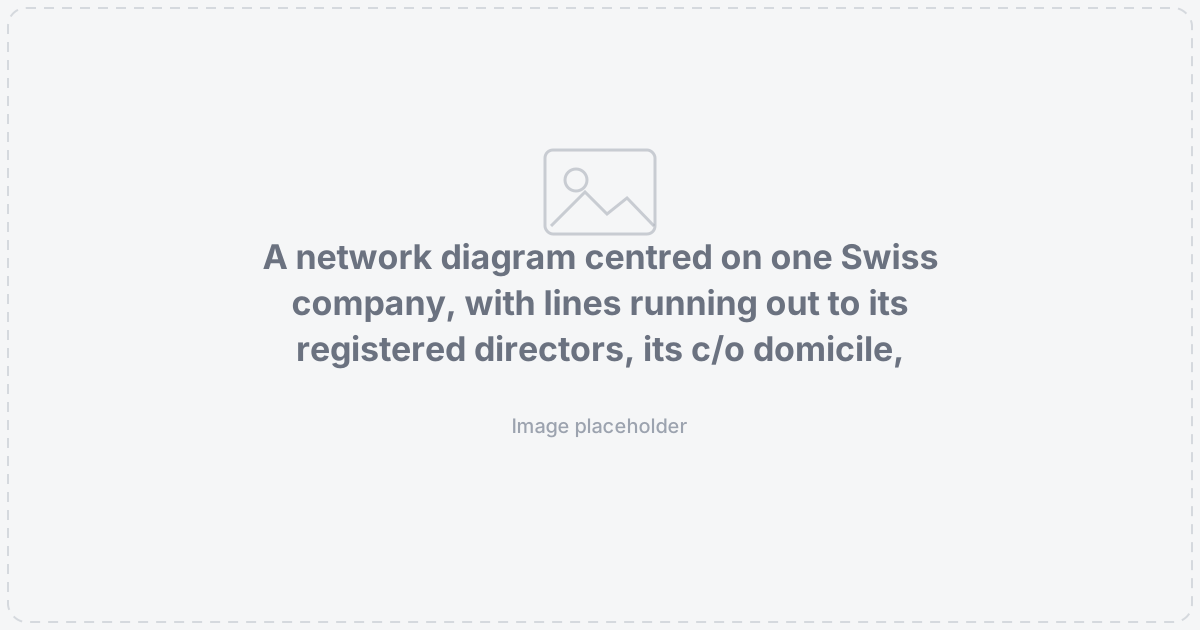
A company profile answers the question "what is this company?" A network view answers a different one: what is this company attached to? Who is entered alongside its officers, which other entities sit at its address, which businesses the same people run, and in what order any of it happened. Once research goes past confirming that a counterparty exists, the second question is usually the one carrying the information.
What is in the graph, and what is not
A Swiss corporate network is assembled from facts that are already on the public record. The nodes are companies, natural persons and addresses. The edges are the relationships the register itself records: a person entered as a director or managing officer, the form of signature they hold, a company's legal domicile, a seat that moved, a name that changed, and the publications that recorded each of those events.
Read that list closely, because of what it leaves out. A network view does not show beneficial owners. The Swiss commercial register does not record who ultimately stands behind an AG, so nothing built on register data can display it — our article on beneficial ownership sets out what is recorded, where it sits, and who is entitled to see it. What a graph gives you is the visible layer of authority and administration, from which control can often be inferred. Inference is useful. It is not ownership, and a file that blurs the two is worse than no file at all.
One genuine ownership edge does exist. A GmbH's quotaholders are entered in the register by name, so wherever a chain of holdings passes through a GmbH, that link is published rather than deduced. The legal form decides whether ownership is on the record at all.
Why the network is the unit of analysis
One entity at a time is enough when the question is simple: does this company exist, what form does it take, who can sign for it. It stops being enough as soon as the question involves a comparison.
- Is the supplier you are onboarding one of several entities registered by the same person within a year?
- Does your counterparty share a board member with a company that was deleted after bankruptcy proceedings?
- Is the entity named on the contract the operating business, or a thinly staffed company at a fiduciary's address with the real activity sitting beside it?
None of that is visible on the subject's own extract. Each question requires looking at what surrounds it. That is the entire case for a network view — not that it holds data an extract does not, but that it puts the neighbouring records in the same frame instead of a morning of tab-switching.
How to read one
Expand one hop at a time
Start with the subject alone and add neighbours deliberately. A graph expanded three hops in every direction is not more informative than one expanded carefully; it is a hairball in which everything looks connected because everything is. Follow the edge you have a reason to follow, and stop when the reason runs out.
Read the edge type before the shape
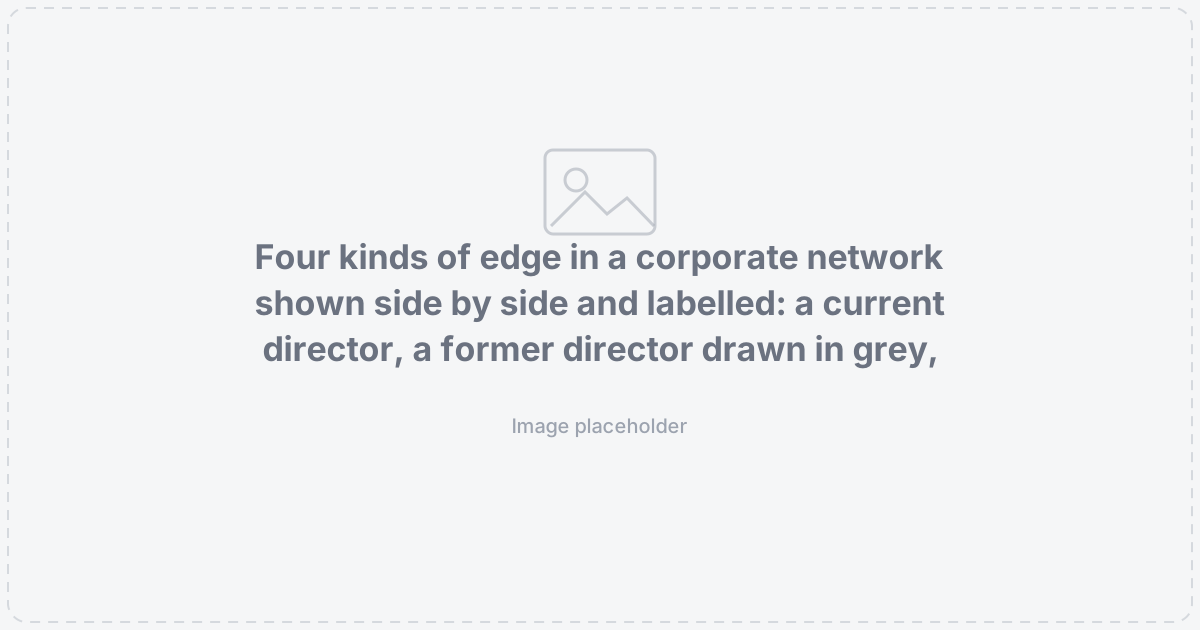
Two companies joined by a line can mean entirely different things. They share a director who holds sole signature for both. They once shared a fiduciary's address. The same person signed for one of them a decade ago. The first is a governance link, the last is barely a link at all, and on a diagram all three are a line. A shape only means something once you know which relationships drew it.
Separate current from former
Registers are cumulative. A person struck off a board years ago remains part of the company's history and, correctly, part of its graph — whether they are part of its present is a different matter. An officer entered last month and an officer removed in 2014 support very different conclusions, and the difference between them is a date on a publication rather than anything visible in the layout.
Treat a shared address as the weakest edge you will see
This is the most over-read relationship in Swiss corporate research. A c/o domicile at a fiduciary, a law firm or a trust company is entirely ordinary, and dozens of unrelated businesses legitimately sit at one. Shared administration is not shared ownership. The address edge earns attention only in combination — the same address and the same sole signatory and formation dates a fortnight apart.
Follow people, not only companies
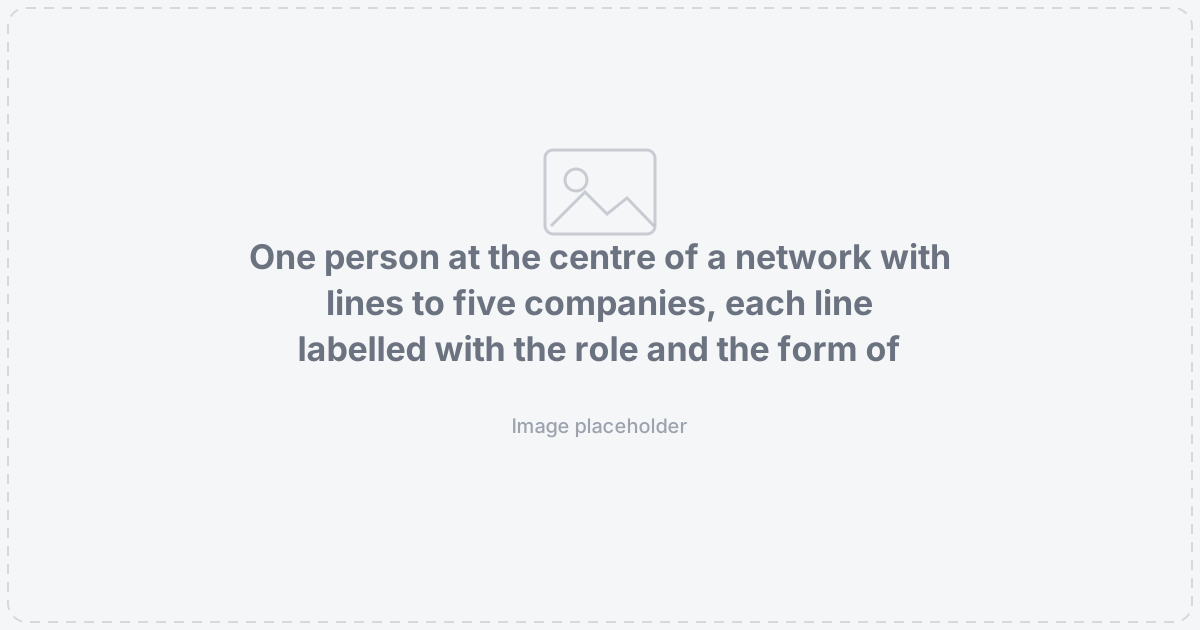
The most productive move in most investigations is to stop looking at the company and look at a person. A natural person entered with sole signature across a cluster of otherwise unconnected entities is doing something structural: running a group, or providing professional directorships as a service. The pattern of their mandates usually says which. Searching the register by person and reading those mandates as a set is often faster than working outwards from any single company.
Let the chain run more than one step, then stop
Many of the relationships worth finding are indirect. The subject's director also serves a company that was, until a recent seat move, domiciled with your counterparty's former auditor. Chains like that are the reason to use a graph at all. They are also where confidence decays fastest: each additional step adds an assumption, and by the third the shape can look compelling while resting on two shared addresses and a coincidence of surnames.
From shape to evidence
The output of reading a network well is not a verdict. It is a short list of records to pull — the publication history of the related entity, the extract for the company at the shared domicile, the formation entry that names who contributed what.
That last step is not optional. A diagram is a hypothesis, and the register is where hypotheses go to be checked. Reading the publications in order is what turns a suggestive picture into something you can put in writing, and the gazette is where the sequence lives.
What a network view cannot tell you
Two limits are worth stating plainly.
The first is the standing caveat on all register work: the commercial register records legal facts and nothing beyond them. It does not certify that a company pays its invoices, performs its contracts or is solvent. An immaculate register history and a poor payment record coexist comfortably, and commercial reliability is a separate enquiry with separate sources.
The second is that private arrangements leave no trace. Nominee holdings, shareholder agreements, pledges over shares, options and side letters are all invisible on the public record, and any one of them can invert a picture built entirely from register data. The absence of an edge is not evidence that no relationship exists — only that none was ever registered.
Neither limit makes the exercise less useful. They set what a finding is allowed to say. "Three companies share a sole signatory and a domicile" is a fact you can stand behind. "These companies are under common ownership" is not, unless something outside the register says so.
In practice
SmartGraph starts from a company or a person and expands along register relationships a step at a time. If you would rather begin from a name or a UID, company search is the other end of the same data.
Frequently asked questions
Does a corporate network show who owns a Swiss company?
Not for an AG. The Swiss commercial register is a publicity register: it names officers, forms of signature, domicile and capital, but not who ultimately holds the shares — so nothing built on register data can display ownership. The one exception is the GmbH, whose quotaholders are entered by name, meaning that where a chain of holdings runs through a GmbH the link is published rather than deduced. Everything else a network shows is authority and administration, from which control is often inferred but never simply read off.
Where does the data in a Swiss corporate network come from?
Every node and edge comes from the public record: the commercial register entries themselves and the publications that recorded each change. That covers registered officers and their form of signature, the legal domicile, seat moves, name changes, and the dates on which each of those was published. Nothing private is in the graph — no share registers, no contracts, no bank records — because none of that is public in Switzerland.
Two companies share the same c/o address. Is that a red flag?
On its own, almost never. A c/o domicile at a fiduciary, a law firm or a trust company is entirely ordinary in Switzerland, and dozens of unrelated businesses legitimately sit at one address. Shared administration is not shared ownership. The address becomes interesting only in combination: the same address, the same sole signatory and formation dates a fortnight apart is a pattern — the address by itself is not.
How far should I expand the graph before it stops being reliable?
Expand deliberately rather than to a fixed number of hops: follow the edge you have a reason to follow, and stop when the reason runs out. Indirect relationships two or three steps away are often the ones worth finding, but every additional step adds an assumption. By the third step a shape can look compelling while resting on nothing more than two shared addresses and a coincidence of surnames.
Can I start from a person instead of a company?
Yes, and in most investigations it is the more productive move. Searching the register by person and reading a natural person's mandates as a set shows whether they run a group or provide professional directorships as a service — something no single company extract reveals. Person search and SmartGraph both start from a name.
Is a network view enough for a due-diligence file?
No — it is the step before the file, not the file. A diagram is a hypothesis, and the evidence is the records it points you to: the publication history of the related entity, the extract for the company at the shared domicile, the formation entry. The register also records legal facts and nothing more, so it says nothing about whether a company pays its invoices or is solvent, and private arrangements such as nominee holdings or shareholder agreements leave no trace on it at all.
Related articles
Beneficial ownership in Swiss companies
The commercial register names officers and signatories, not ultimate owners. What is visible, what is recorded privately, and how to read control.
8 min read
Read articleActive, merged or dissolved: Swiss company status
What 'active' really means on a Swiss register entry, how liquidation and mergers appear in the gazette, and why a deleted company is not always bad news.
10 min read
Read articleHow a Swiss company credit check works
What a Swiss commercial credit report is assembled from, why the register cannot tell you whether a company pays, and what a debt-enforcement extract adds.
11 min read
Read article